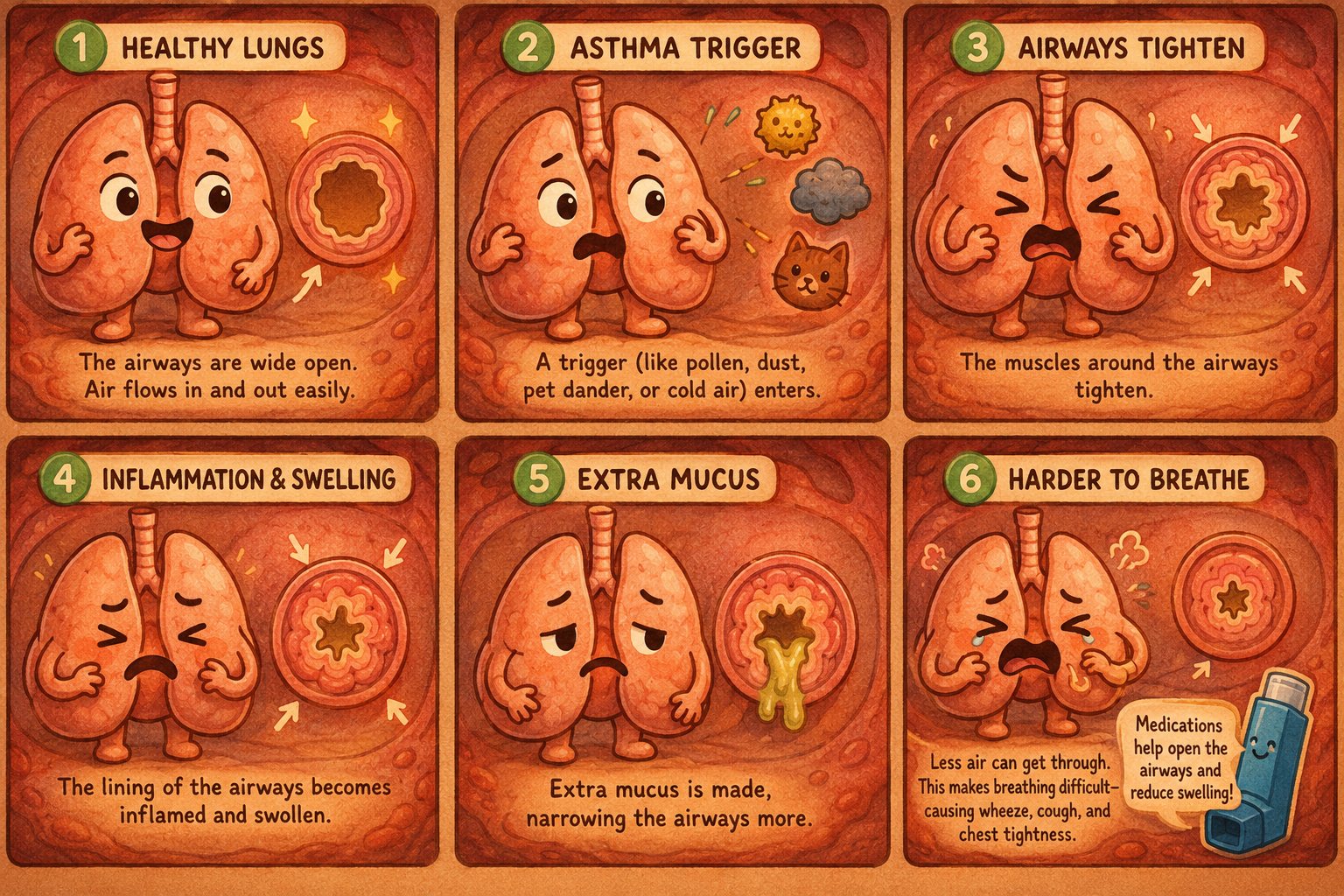
Asthma: The Mystery Behind Every Breath

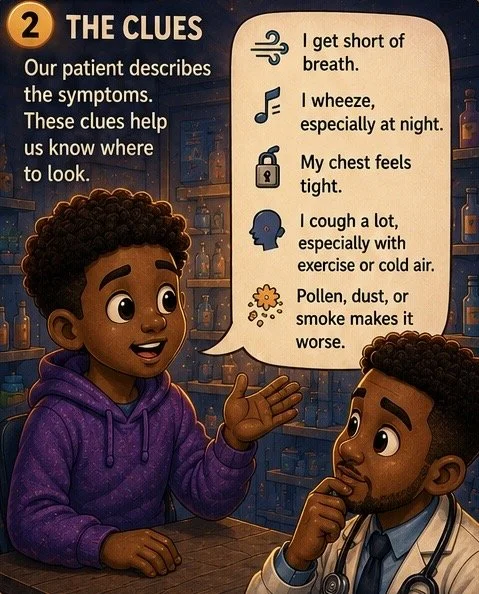
The Clues
The patient explains the symptoms he has been experiencing, including wheezing, coughing, chest tightness, and shortness of breath. He also notices that triggers like exercise, cold air, pollen, dust, or smoke can make his breathing worse. These important clues help the doctor recognize signs commonly associated with asthma.
The Visit
The doctor begins by talking with the patient to learn more about how he has been feeling. This helps the doctor understand the symptoms, ask important questions, and start investigating what might be causing the breathing problems.
The Investigation & Reveal
To better understand the patient’s breathing problems, the doctor performs tests to examine how well the lungs and airways are working. The results reveal important clues, including airway inflammation, narrowed airways, excess mucus, and triggers that can worsen symptoms. After reviewing the findings, the doctor explains that the patient has asthma—a condition where the airways become swollen and tight, making it harder for air to move in and out of the lungs. With proper treatment and healthy habits, asthma can often be well controlled.

What Happens Next?
The doctor teaches the patient how to manage asthma and prevent flare-ups. Using inhalers, avoiding triggers, staying active, and taking medications as prescribed can help keep the airways open and healthy. With the right care and support, people with asthma can continue to live active and healthy lives.